Home › Styles
Tattoo shops by style
Pick a style to see the shops that do it. A shop is listed under a style only when a customer review or the shop's own website mentions that style, and every shop page shows the sentence it comes from.
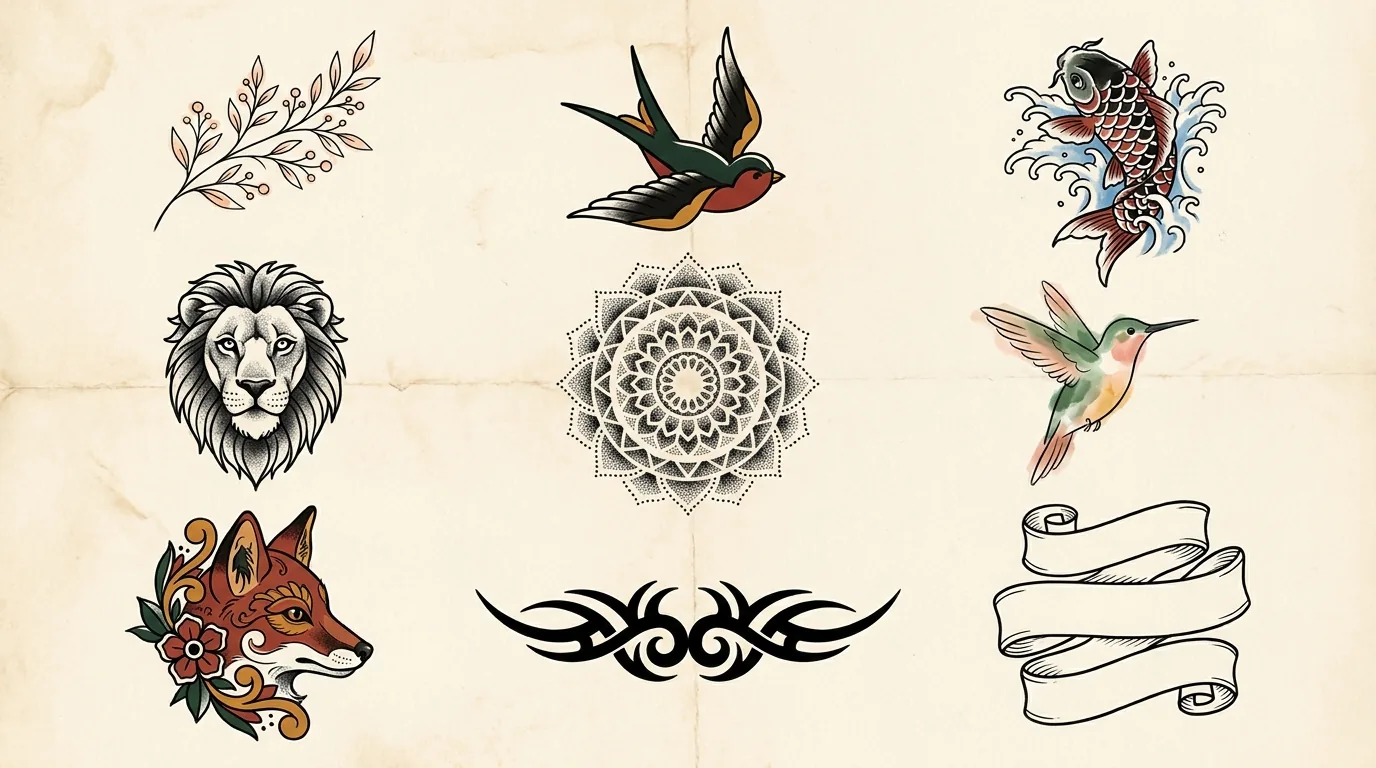
Every style, by shop count
- Fine line3,854 shops
- Realism2,999 shops
- Color2,565 shops
- Black and grey2,367 shops
- Portraits2,131 shops
- Traditional2,010 shops
- Lettering & script1,727 shops
- Neo-traditional1,070 shops
- Anime932 shops
- Geometric & dotwork913 shops
- Blackwork883 shops
- Watercolor680 shops
- Polynesian & tribal529 shops
- Japanese524 shops
What each style looks like
Fine line
Thin, crisp lines made with a small needle grouping, usually in black or grey. Common for small, delicate pieces: script, flowers, simple symbols. Thin lines can soften as a tattoo ages, so ask to see healed work.
Traditional
Bold black outlines, a small set of solid colors (red, green, yellow, black) and simple shading. Classic images include roses, eagles, panthers, swallows, daggers and anchors. Also called American traditional or old school.
Realism
Tattoos that look like a photo or a real object: smooth shading and fine detail, often with no hard outlines. Done in black and grey or full color.
Black and grey
Black ink diluted to make a range of greys, with no color. Smooth gradients and soft shading, often used for realism, portraits and religious or script pieces.
Japanese
Large, flowing designs with bold outlines and backgrounds of wind, water or clouds. Common images are koi, dragons, tigers, peonies and cherry blossoms. Often planned as a sleeve or back piece.
Neo-traditional
Builds on traditional tattoos: bold outlines, but with varied line weights, a wider color palette and more depth and detail. Animals, flowers and ornamental frames are common.
Blackwork
Solid black ink only, often with large filled areas, bold patterns and graphic or ornamental designs.
Color
Pieces where colored ink carries the design, from bright cartoon colors to blended, realistic color. Color looks its truest once healed, so look at healed photos.
Portraits
A likeness of a person or a pet, usually tattooed from a photo in black and grey or color realism. A sharp, well-lit reference photo makes a big difference.
Lettering & script
Words, names, dates and quotes, from thin cursive script to bold blackletter. Very small letters can blur together over the years, so size matters.
Geometric & dotwork
Designs built from shapes, lines and repeating patterns, such as mandalas, with shading made from many small dots instead of smooth gradients.
Watercolor
Soft washes and splashes of color that look like a watercolor painting, often with little or no black outline. Many artists add some linework so the design keeps its shape.
Anime
Characters and scenes from Japanese animation and manga, usually with clean outlines and bright, flat or cel-shaded color. Bring the exact reference image you want.
Polynesian & tribal
Bold black patterns from Pacific Island traditions such as Samoan, Māori and Hawaiian, and the wider tribal style: solid black bands, spirals and repeating motifs that follow the body.
Choosing an artist for a style
Many shops have several artists, and each has their own strengths. Once you find a shop, look at each artist's portfolio (usually on Instagram) for healed work in the style you want, not just fresh photos. Bring a reference image and know the size and placement you have in mind. A consultation is the place to ask how the design will age.