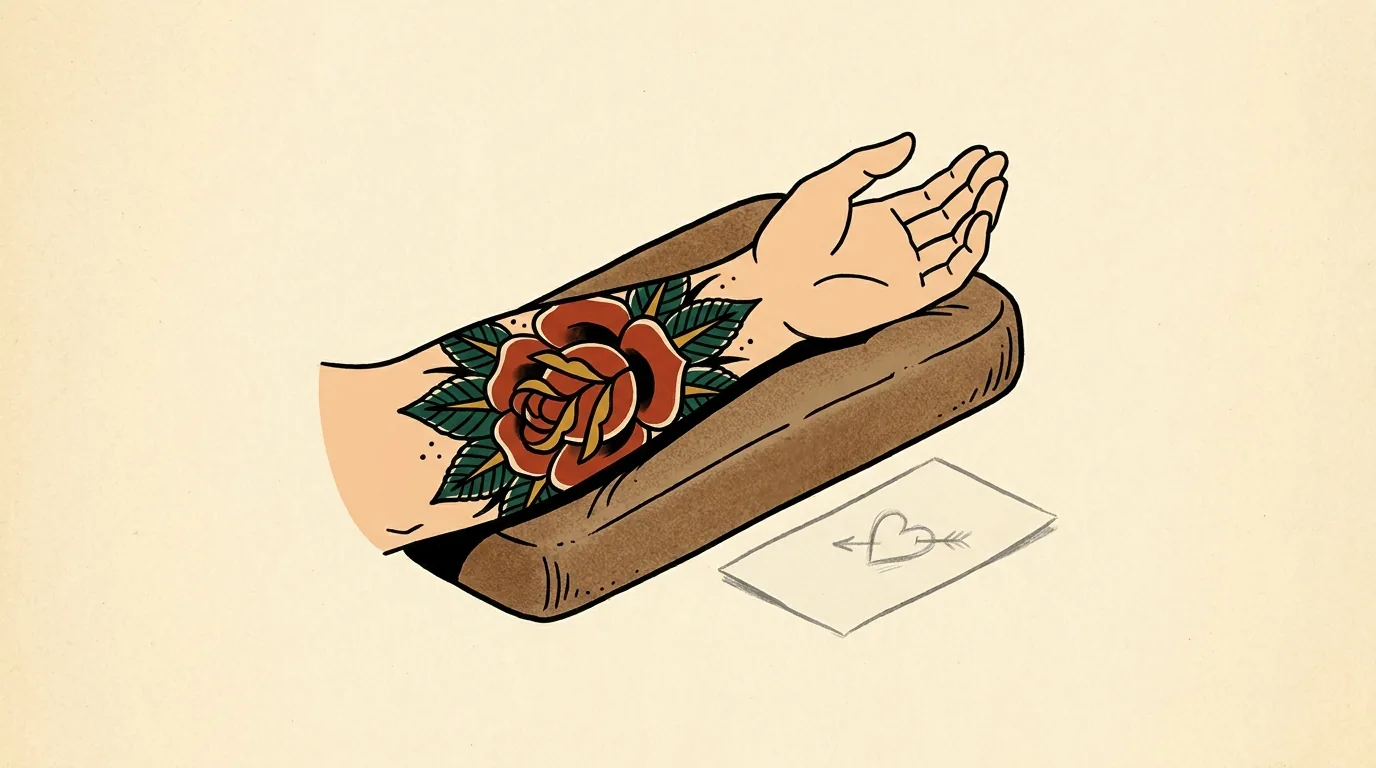
People cover tattoos for all kinds of reasons: a name that no longer fits, a design that aged badly, a tattoo that was done poorly, or one that just isn’t you anymore. A cover-up can turn that into something you like. It can’t make the old tattoo vanish under any design you pick, though. Knowing how cover-ups work makes the consultation much easier.
Why cover-ups are a specialty
Tattoo ink isn’t like paint on a wall. It sits in the skin and is partly see-through, so a new layer of ink doesn’t block out the old one completely. Old ink stays visible through lighter colors. A cover-up works by hiding the old lines inside darker areas, heavy shading and busy detail in the new design, so the eye reads the new picture and not the old one.
That takes planning. The artist has to map where the old dark lines are and build a design whose dark parts land in the right places. It’s one of the hardest things in tattooing, and some artists are much better at it than others.
Size and darkness
Two things about the old tattoo decide most of what’s possible:
- How dark it is. Faded, light or thin-lined tattoos are the easiest to cover. Bold, solid black is the hardest. Old tattoos that have faded over the years are often easier than newer ones.
- How big it is. The new design almost always needs to be larger than the old one, so its darker parts and detail can surround and swallow the old lines. Expect the cover-up to be noticeably bigger.
Designs that cover well usually have lots of organic shapes, texture and contrast: flowers, leaves, feathers, animals, waves, clouds and heavy shading. Bold traditional and neo-traditional work, Japanese designs and dark black and grey pieces are common cover-up choices. Light, airy designs with lots of open skin, such as fine line or soft watercolor, usually can’t hide much.
Cover-up, rework or blast-over?
Not every old tattoo needs to disappear. Artists generally talk about three options:
| Option | What it means |
|---|---|
| Cover-up | A new design that hides the old tattoo completely, or close to it. |
| Rework | Keeping the old design but improving it: new outlines, more shading, fresh color, or added elements to fix proportions. |
| Blast-over | A bold new design tattooed over the old one without trying to hide it. The old tattoo stays faintly visible underneath on purpose. |
If you like the idea of your old tattoo but not how it looks now, a rework can be smaller, quicker and closer to what you had in mind. A blast-over suits people who like a layered, raw look. Ask the artist which makes most sense for your piece.
When laser fading comes first
Sometimes the best first step is a few sessions of laser tattoo removal, not to remove the tattoo fully but to lighten it. A faded tattoo gives the cover-up artist much more freedom. The new design can be smaller, lighter, or in a style that wouldn’t hide the original at full darkness.
Laser removal is done by a separate provider, such as a laser clinic or dermatology practice, not usually by the tattoo shop. Sessions are spaced weeks apart to let the skin recover. Talk to a qualified provider about how it works for your skin, the risks and the aftercare.
Before booking laser, talk to your cover-up artist. They can tell you whether fading is needed and roughly how light the old tattoo should be before they start. That saves you from paying for more sessions than the cover-up needs.
The consultation
Almost every cover-up starts with a consultation. Expect the artist to want to see the old tattoo in person, or at least in clear photos. To prepare:
- Take good photos. Use daylight, no filter, straight on, with a ruler or coin in the frame for scale.
- Bring references, loosely. Show ideas you like, but be open. The old tattoo limits what will work, and your artist will suggest designs that hide it well.
- Be clear on your goal. Total cover, rework or blast-over? Is it fine if the cover-up spreads further across your arm or back?
- Ask about sessions. Cover-ups often take more than one session, especially when heavy shading is involved.
Many artists draw the new design over a photo of your old tattoo so you can see how it will hide. Some place a stencil or draw directly on the skin. It’s fine to ask questions and ask for changes, within what will still cover. Our guide to consultations and deposits covers booking in general.
Choosing a cover-up artist
Look for an artist who shows cover-ups in their portfolio, ideally with before-and-after photos and healed results. Fresh cover-ups can look perfect; healed ones show whether the old tattoo creeps back through. Ask how many cover-ups they’ve done in a style like the one you want.
The cover-up tattoo shops pages list shops whose reviews or websites mention cover-up work, by state and city, with the review sentence or website shown for each. Our guide on how to choose a tattoo artist covers portfolios and hygiene questions.
Healing and touch-ups
A cover-up heals like any other tattoo. Follow your artist’s aftercare sheet and see our aftercare guide for the general steps. Because cover-ups often have dense ink and heavy shading, they can feel more tender and take a little longer to settle.
Once it’s healed, you may notice a faint trace of the old tattoo in a spot or two. A touch-up session can usually fix that. Ask about the shop’s touch-up policy when you book.
Setting the right expectations
- The cover-up will usually be bigger and darker than your old tattoo.
- You may not get the exact design you first imagined, but a good artist will find one you like that works.
- It may take more than one session, and possibly laser fading first.
- A skilled cover-up is worth waiting for. The goal is a tattoo you never have to cover again.
Common questions
- Does a cover-up have to be bigger than the old tattoo?
- Usually, yes. The new design needs enough dark areas and detail in the right places to hide the old lines, and that rarely fits in the same footprint. How much bigger depends on how dark and solid the old tattoo is.
- Can a black tattoo be covered?
- Light or faded black can often be covered. Very dark, solid black is hard to cover with anything except more black. A few laser sessions to lighten it first can open up more options. Ask a cover-up artist to look at it.
- Can I get a light or pastel cover-up?
- Not over a dark tattoo. Tattoo ink is not opaque like paint, so light colors do not hide darker ink beneath them. A light design over an old tattoo usually needs laser fading first.
- How long should I wait to cover a new tattoo?
- The old tattoo should be fully healed first, which usually means at least several weeks and often longer. Your cover-up artist will tell you when the skin is ready.