Your artist’s instructions win. Artists use different wraps, products and routines, and they know what they used on you. If anything here differs from your aftercare sheet, follow the sheet. This guide is general information, not medical advice. If you think something is wrong, see a doctor.
Good aftercare is mostly about not doing things. The skin knows how to heal. Your job is to keep it clean, keep germs and irritation away, and avoid the few things that pull ink out or damage new skin. Here is how most artists describe the process.
The first day: the wrap
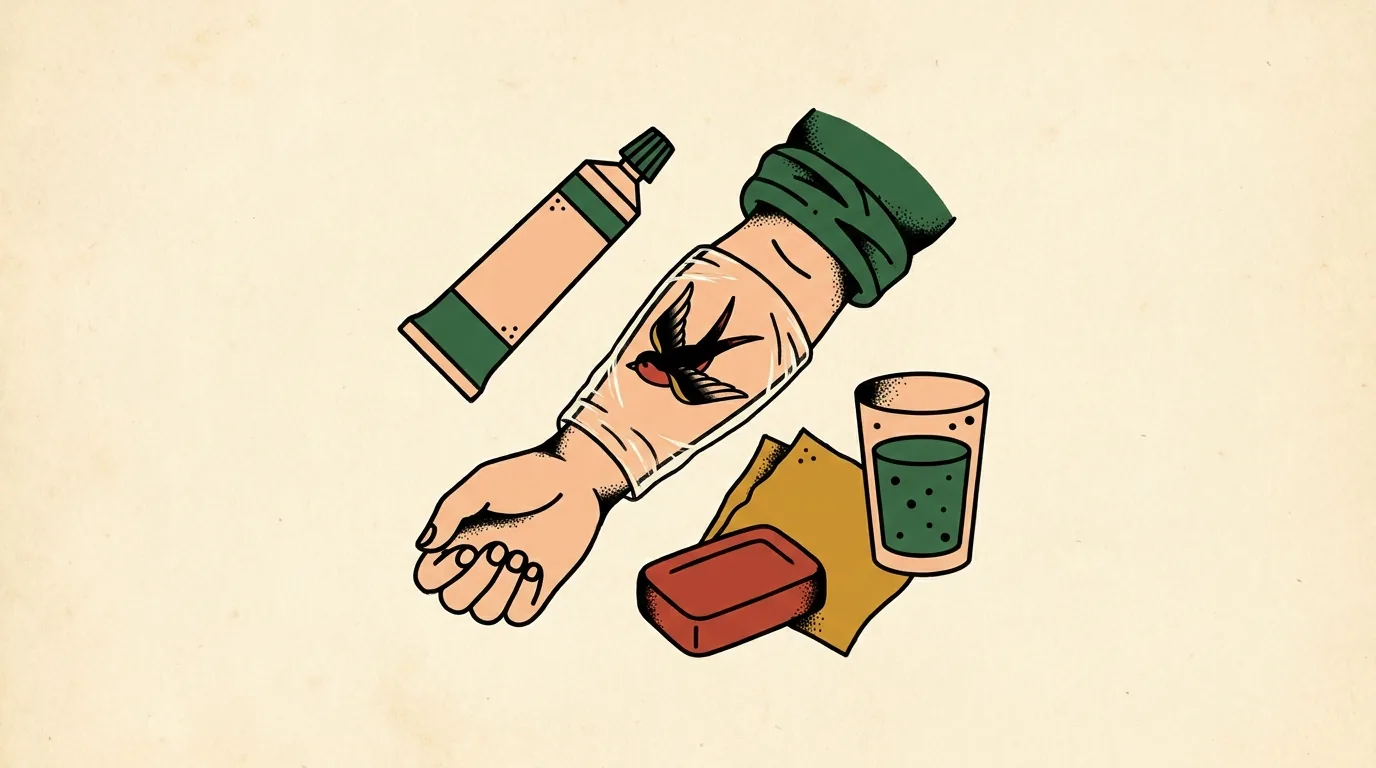
Your artist covers the finished tattoo before you leave. The two common options are plastic wrap or a breathable bandage, and a clear adhesive film that sticks to the skin.
- Plastic wrap or a bandage is usually meant to come off within a few hours. Your artist will tell you when.
- Clear adhesive film is often left on longer, sometimes a few days, and may be replaced once. Fluid collecting under it is normal at first. If it leaks, peels away or the skin under it looks irritated, take it off as your artist explained.
Wash your hands before you touch the tattoo. Take the wrap off slowly. Warm water helps loosen adhesive film.
How to wash a new tattoo
Most artists suggest washing gently a couple of times a day while it heals.
- Wash your hands first.
- Use lukewarm water and a mild, fragrance-free soap.
- Wash with your fingertips only. Skip washcloths, loofahs and sponges; they’re rough and hold bacteria.
- Rinse off all the soap.
- Pat it dry with a clean paper towel, or let it air dry. Bath towels can hold bacteria and leave lint.
On the first day or two, the tattoo may seep clear fluid, ink and a little blood. That’s normal. Gentle washing keeps it from drying into thick scabs.
Moisturize thin
Once the tattoo is clean and dry, put on a thin layer of the ointment or fragrance-free lotion your artist recommends. Rub it in until the skin looks barely moist, not shiny. If it looks wet or greasy, you used too much. Dab the extra off with a clean paper towel.
Too much product can trap moisture, clog the skin and slow healing. Too little and the skin dries out, cracks and itches more. A light layer a few times a day, when it feels tight or dry, is the usual advice.
What to avoid while it heals
- Soaking. No baths, pools, hot tubs, lakes or ocean until it has fully healed. Short showers are fine. Don’t aim the spray straight at the tattoo for long.
- Sun. Keep it out of direct sun and tanning beds. Cover it with loose clothing. Don’t put sunscreen on a fresh, open tattoo; save that for after it heals.
- Picking and scratching. Itching is part of healing. Don’t scratch, and don’t pull off flakes or scabs. Pulling them can take ink with them. A light tap or a little lotion helps with the itch.
- Friction. Tight clothes, straps and waistbands rub on a new tattoo. Wear loose, soft, clean fabrics over it.
- Dirt and sweat. Keep gym equipment, pets and dirty surfaces off it. Sleep on clean sheets. If you sweat on it, wash it gently afterward.
- New products. Don’t try scented lotions, makeup or home remedies on it. Stick to what your artist recommended.
A general healing timeline
These are the ranges artists commonly give. Healing varies with the size of the tattoo, how heavily it was worked, where it is, and your own skin and health. Large pieces, heavy color and spots that move a lot often take longer.
| When | What’s usually normal |
|---|---|
| First few days | Redness, mild swelling and tenderness, like a sunburn. Seeping clear fluid and ink at first. The tattoo looks bright and sharp. |
| About week 1 to 2 | Itching, then flaking and peeling, sometimes light scabbing. Flakes may be tinted with ink. This is the stage to leave alone. |
| About week 2 to 4 | The surface usually finishes peeling. The tattoo can look cloudy, dull or milky for a while as a new layer of skin settles over it. |
| The months after | The deeper skin keeps healing. The tattoo’s final look settles over a month or more, sometimes a few months. |
Once the surface has healed, keep moisturizing now and then, and start using sunscreen whenever the tattoo is in the sun. Sun is one of the main reasons tattoos fade over the years.
Normal healing vs. signs to see a doctor
Some discomfort is expected. The pattern to watch is whether things are getting better or worse after the first few days.
Usually normal
- Redness and mild swelling that fade over the first few days.
- Tenderness, like a sunburn.
- Clear or ink-tinted fluid in the first day or two.
- Itching, flaking and peeling.
- A cloudy or patchy look while new skin forms.
See a doctor if you notice
- Redness, swelling or pain that spreads or gets worse after the first few days.
- Heat around the tattoo, or skin that feels hot to the touch.
- Pus, a bad smell, or thick yellow or green fluid.
- Red streaks spreading from the tattoo.
- Fever, chills or feeling unwell.
- A rash, raised bumps or strong itching in one color of the tattoo, which can be a reaction to that ink, even weeks or months later.
If you think the tattoo is infected or you’re reacting to it, see a doctor. Don’t wait to see if it passes, and don’t treat it yourself with leftover medicine. Let your artist know too, but a shop can’t diagnose or treat an infection. If you feel very unwell or the redness is spreading fast, get care right away.
Touch-ups
After a tattoo heals, a small patch may look lighter or uneven. That can happen even with good aftercare, especially on hands, feet and spots that rub. Many shops offer a touch-up once the tattoo has fully healed, often free within a certain time. Ask about the touch-up policy when you book, and wait until it’s fully healed before going back. If you’re wondering whether to tip on a touch-up, see how much to tip a tattoo artist.
Aftercare for piercings
Piercings heal differently from tattoos and usually take longer. The piercer’s instructions are different too, and lotions meant for tattoos are not usually used on a piercing. If you got pierced at a tattoo and piercing shop, follow the piercer’s own aftercare sheet.
Planning ahead
Aftercare is easier if you plan for it before you book. If you have a beach trip, a pool party or a sports season coming up, schedule the tattoo after it, or give yourself several weeks before it. When you choose an artist, ask how they wrap tattoos and what products they recommend, so you can have them ready at home.
Common questions
- When can I swim after a tattoo?
- Not until it has fully healed on the surface, with no scabs, flaking or shiny patches left. That is often a few weeks, but it depends on the tattoo and on you. Pools, hot tubs, baths, lakes and the ocean all count as soaking. Ask your artist if you are unsure.
- Is peeling normal?
- Yes. Most tattoos flake and peel like a sunburn in the first couple of weeks, and the peeling skin may be tinted with ink. Let it come off on its own. Don’t pick or scratch it.
- How do I know if my tattoo is infected?
- Redness, swelling or pain that keeps getting worse after the first few days, heat spreading around the tattoo, pus, red streaks, or a fever or chills are reasons to see a doctor. Don’t wait it out and don’t rely on the shop to diagnose it.
- When can I work out after a tattoo?
- Many artists suggest taking it easy for at least a few days, keeping sweat and friction off the area, and wiping down shared equipment before it touches the tattoo. Follow your artist’s advice for the placement you chose.