Most first tattoos follow the same path. You decide what you want and where, you find an artist whose work matches it, you book or walk in, you sit for the tattoo, and then you spend a few weeks looking after it while it heals. This guide walks through each step and the questions worth asking along the way.
Start with the idea, not the shop
Before you look at shops, get clear on three things: what the tattoo is, roughly how big it is, and where it goes on your body. You don’t need a finished drawing. An artist can turn a rough idea and a few reference pictures into a design. But you do need to know what you want it to say or show.
- Give it time. If you still want the same idea after a few weeks or months, that’s a good sign. A design you fell for yesterday might not feel the same next year.
- Collect references. Save a handful of images that show the subject, the style and the mood you like. Note what you like about each one, such as the line work, the colors or the composition.
- Think about visibility. Hands, neck and face tattoos are hard to cover. If your work, school or family situation matters to you, a spot you can choose to show or hide is a safer first step.
- Check any words twice. Spelling, dates and translations should be checked before you book and again on the stencil.
Placement and size
Placement changes how a tattoo looks, how much it hurts and how well it ages. Popular first spots include the outer forearm, upper arm, shoulder, outer thigh and calf. They’re easy to tattoo, easy to care for, and usually described as less painful. Our tattoo pain chart covers which areas are usually rougher.
Size matters more than most first-timers expect. Ink spreads very slightly under the skin over the years, so fine details packed into a tiny space can blur together. Very small lettering and tiny, detailed designs are where this shows first. If an artist suggests going a little bigger, it’s usually about how the tattoo will look in ten years, not about charging more.
Spots that rub a lot or get a lot of sun, such as fingers, hands and feet, tend to fade faster and may need touch-ups. That doesn’t rule them out, but it’s worth knowing before you choose one for your first tattoo.
Choose a style, then an artist
Tattoo artists usually specialize. Some do bold traditional work, some do fine line, some do realism or Japanese, and some do a bit of everything. If you know the look you want, find an artist who already does it well. Read tattoo styles, explained if you’re not sure what your idea is called, then browse shops by style.
Look at the artist’s portfolio on their website or social media, and ask to see healed photos, not just fresh ones. A tattoo photographed right after it’s finished looks sharper and brighter than it will once it settles. How to choose a tattoo artist covers what to look for, the hygiene questions to ask and the red flags.
Walk-in or appointment?
Many shops take walk-ins for small tattoos and pre-drawn flash designs when an artist is free. A custom piece usually needs an appointment, often with a consultation and a deposit first. If your first tattoo is small and simple, a walk-in can work well. If it’s larger or custom, book. Our guide to walk-ins and appointments explains both, and you can find shops whose reviews or websites mention walk-ins on the walk-in tattoo shops pages.
For a booked piece, read consultations and deposits before you reach out. It covers what to send the artist and how deposits usually work.
Before the day
- Sleep well the night before. Being tired makes pain feel worse.
- Eat a full meal an hour or two before, and bring water and a snack. Low blood sugar is a common reason people feel faint in the chair.
- Skip alcohol before your appointment. Shops won’t tattoo someone who is drunk, and many ask you not to drink the night before.
- Wear the right clothes. Choose something that gives the artist easy access to the spot and that you don’t mind getting ink on. Loose clothes are more comfortable over a fresh tattoo on the way home.
- Bring your ID and payment. Ask ahead whether the shop takes cards or prefers cash, and budget for a tip. See how much to tip a tattoo artist.
- Reschedule if you’re sick or the skin in that spot is sunburned, broken or irritated. Let the shop know as early as you can.
If you have a medical condition that affects healing or bleeding, or you take medicine that does, talk to your doctor before you book.
At the shop
Paperwork and ID
You’ll fill out a consent form and show a photo ID. The form usually asks about allergies, medical conditions and medicines. Answer honestly; it’s there to protect you.
The stencil
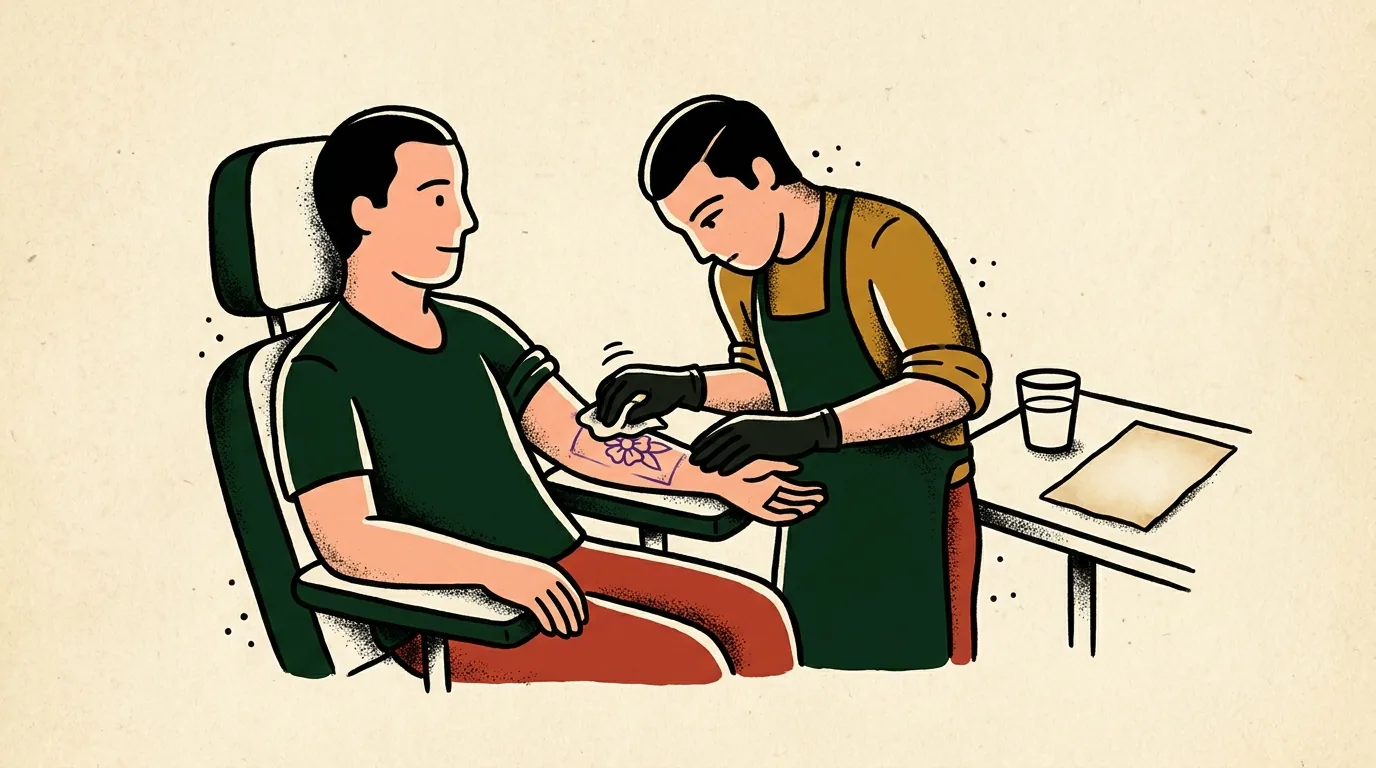
The artist prints or draws your design and transfers it to your skin as a stencil. This is the moment to check everything: size, angle, position and spelling. Stand naturally and look in a mirror. It’s normal to ask for the stencil to be moved or resized, and a good artist would rather redo it than have you unhappy later.
Setup
Watch the setup. The artist should wear fresh gloves, cover the work surfaces, and open new single-use needles or cartridges. Ink is usually poured into small single-use caps. If anything about the setup worries you, ask about it. A professional won’t mind explaining.
The tattoo
The first minute or two is often the hardest, while you get used to the feeling. Breathe slowly and try to stay still. If you need a break, a drink or a moment, say so before you move. Artists take breaks during longer sessions anyway.
Right after
When the tattoo is done, the artist cleans it, may take a photo, and covers it with a wrap or a clear adhesive film. They’ll explain how to look after it, often with a printed aftercare sheet. Follow their instructions; they know how they work and what they used.
Expect the area to be red, a little swollen and tender for a few days, like a sunburn. Keep it clean, keep it out of pools and the sun, and don’t pick at it as it peels. Our tattoo aftercare guide covers the healing weeks step by step, including the signs that mean you should see a doctor.
Signs a shop isn’t right for a first tattoo
- No ID check and no consent form.
- The artist can’t or won’t show healed work.
- You’re pushed to decide on the spot or to pay before you understand the terms.
- Hygiene questions get brushed off, or the setup isn’t done in front of you.
You can always walk away. There’s no wrong time to change your mind before the needle starts.
Finding a shop. Every shop on tattooshops.net is listed because its Google listing and its reviews, name or website show it does tattoos, and each claim on a listing (walk-ins, cover-ups, piercing, styles) shows the review sentence or website it comes from. Start with your state or the best-rated shops by state, ranked by rating and review count.
Common questions
- How old do I have to be to get a tattoo?
- Most shops tattoo only adults 18 and older and check a government photo ID at every appointment. The exact rules vary by state and by shop, and many shops refuse to tattoo anyone under 18 even where the law allows it with a parent’s consent. Call the shop if you are unsure.
- Does a first tattoo hurt?
- Yes, some. Most people describe it as a scratching or stinging feeling that is very manageable on spots like the outer arm or outer thigh, and stronger over bone or thin skin like the ribs, feet and spine. Sleep, a full meal and short breaks all help.
- Can I bring my own design?
- Yes. Most artists use your design or reference images as a starting point and redraw it so it works as a tattoo at the size and placement you want. Many will not copy another person’s tattoo exactly, which is a good sign of a professional.
- How long does a small tattoo take?
- A small, simple tattoo is usually done in one short session. Setup, the consent form and placing the stencil take time too, so plan for longer than the tattooing itself. Large or detailed pieces can take several sessions.