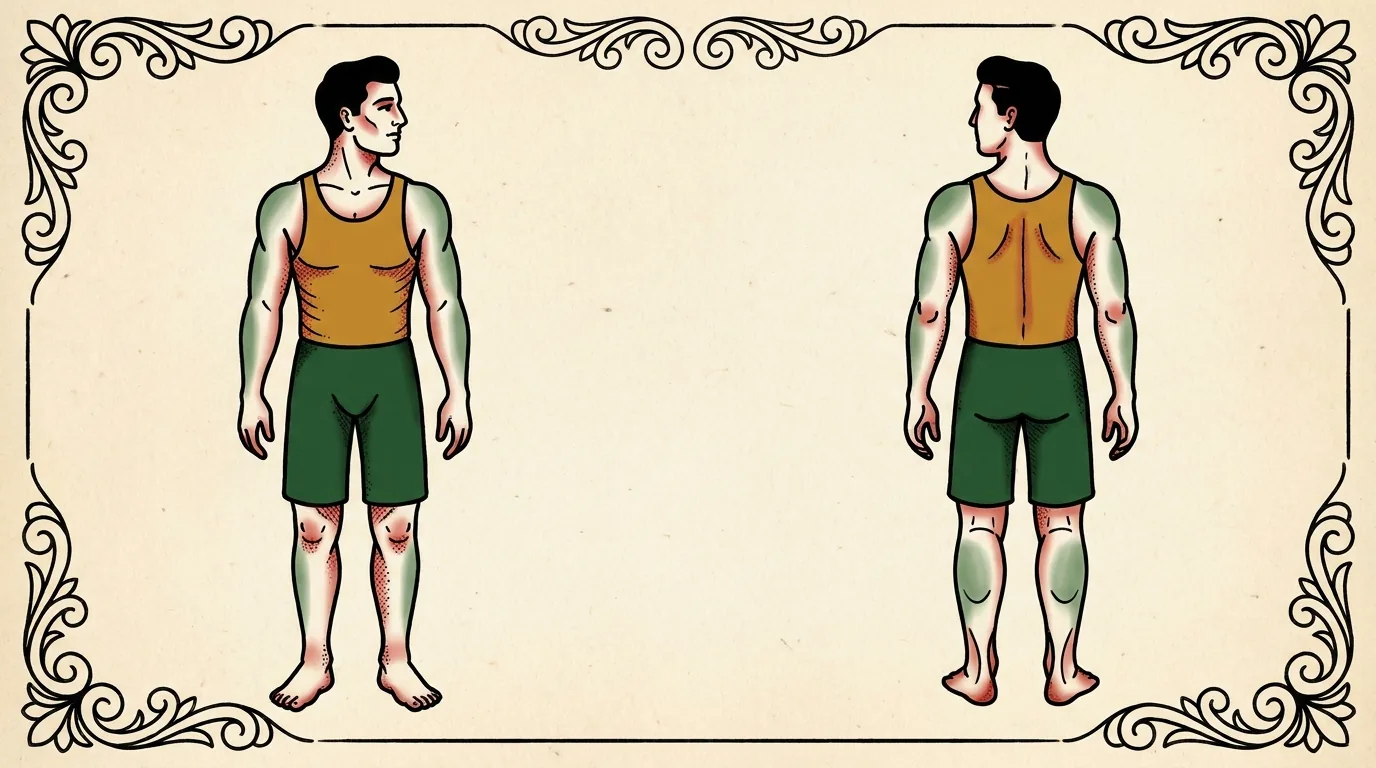
Ask a room of tattooed people which spot hurt most and you’ll get different answers. Pain depends on the person, the day and the tattoo. Still, the same body areas come up again and again as the rough ones, and the same areas come up as the easy ones. This guide sorts them into three groups, explains why, and gives practical ways to make any session easier.
No numbers here, on purpose. Pain charts online often score each spot from 1 to 10, but there’s no reliable measure behind those scores. What follows is how areas are commonly described by tattooed people and artists, not a scale.
Why some spots hurt more
A few things make an area more or less sensitive:
- Bone close to the surface. Where there’s little fat or muscle between skin and bone, like the ribs, ankles and spine, the needle’s vibration can feel sharp and buzzy.
- Thin skin. Thin, soft skin, like the inner arm or the inside of the elbow, tends to be more sensitive.
- Nerve endings. Hands, feet, lips, the face and the groin have more nerve endings near the surface.
- Stretchy or folding skin. Skin that folds or stretches, like the armpit, the back of the knee and the stomach, is harder to tattoo and often feels worse.
- Padding. Areas with more muscle or fat, like the outer thigh and calf, are usually easier.
The tattoo pain chart
Usually described as more painful
| Area | Why it’s often rough |
|---|---|
| Ribs | Thin skin right over bone, and the skin moves every time you breathe. One of the most commonly named painful spots. |
| Sternum and center chest | Bone just under the skin. The vibration can be intense. |
| Spine | The bony line down the back is much more sensitive than the muscle on either side. |
| Armpit | Very sensitive, thin, folding skin. Often described as one of the worst. |
| Feet and ankles | Little padding, lots of bone and nerve endings. |
| Hands and fingers | Thin skin, bone and many nerve endings. These spots also fade faster. |
| Inner elbow and back of knee | Thin, soft skin that folds. |
| Head, face and neck | Thin skin over bone, and close to the ears, so the buzz feels loud. |
| Hips and groin | Bony hip points and very sensitive skin around the groin. |
| Kneecap and elbow | Bone right under tough, folding skin. |
Usually described as in between
| Area | Notes |
|---|---|
| Inner arm and inner bicep | Thinner, softer skin than the outer arm. Often more sensitive than people expect. |
| Chest | The muscle over the chest is easier; it gets rougher toward the sternum and collarbones. |
| Stomach | Varies a lot from person to person, depending on the skin and how much it stretches. |
| Upper back | Mostly manageable, rougher over the shoulder blades and toward the spine. |
| Shins | The bone runs close under the skin along the front of the leg. |
| Inner thigh | Softer and more sensitive than the outer thigh. |
Usually described as less painful
| Area | Why it’s often easier |
|---|---|
| Outer upper arm | Muscle and thicker skin. A classic first-tattoo spot. |
| Outer forearm | Easy to reach, fairly well padded, and easy to look after. |
| Outer shoulder | Muscle under the skin. It gets rougher toward the collarbone and the top of the shoulder blade. |
| Outer thigh | Plenty of muscle and padding, and room for large pieces. |
| Calf | Muscle and padding, though it gets rougher near the ankle and behind the knee. |
Inner arm vs outer arm
The arm is a good example of how much placement matters. The outer arm, from shoulder to elbow and along the outside of the forearm, is one of the most common first tattoo spots because it’s usually described as one of the easiest. Move around to the inner bicep and the inside of the forearm, and the skin gets thinner and softer, so many people find it noticeably more sensitive. The inside of the elbow is rougher again.
Thigh and shoulder
The outer thigh is often described as one of the easiest places for a large tattoo: lots of padding and room to work. The inner thigh is more sensitive, and the area near the groin and the back of the knee more so. The shoulder is similar. The rounded outer shoulder is usually fine; the collarbone, the top of the shoulder blade and the area near the neck are bonier and rougher.
What else changes how it feels
- You. Pain tolerance differs from person to person, and from day to day for the same person.
- Sleep, food and stress. Being tired, hungry or anxious makes pain feel worse.
- Session length. Skin gets more tender over a long session. The last hour of a long sitting is often harder than the first.
- What the artist is doing. Outlining, shading and packing solid color feel different. Many people find going over an already-worked area the most uncomfortable.
- The start. The first few minutes are often the worst, until you settle in.
How to make a session easier
- Sleep well the night before.
- Eat a full meal beforehand, and bring water and a snack or a sugary drink for longer sessions.
- Skip alcohol. Shops won’t tattoo someone who is drunk, and it doesn’t help with pain.
- Breathe slowly and steadily. Holding your breath makes you tense up.
- Ask for breaks. A short pause to stretch, drink water or reset is normal. Say so before you move.
- Stay still. If you need to move, warn the artist first.
- Distract yourself. Talk to the artist, or bring headphones if they’re OK with it.
- Split large pieces. Several shorter sessions are easier than one marathon.
- Pick placement with pain in mind. For a first tattoo, choosing an easier spot can make the whole experience better.
Numbing creams and pain relievers are a question for your artist, and for a pharmacist or doctor. Some artists don’t want you to use numbing products because they can affect the skin. Don’t take anything before a session without checking first.
After the session
A new tattoo usually feels sore, warm and tender for a few days, a lot like a sunburn. That should get better, not worse. Our aftercare guide explains what’s normal, what isn’t, and when to see a doctor.
Talk to your artist
Artists have seen every reaction. Tell them if it’s your first tattoo, if you’re nervous, or if you’ve ever fainted from needles. They can pace the session, plan breaks and suggest placements that suit you. If you’re still choosing someone, see how to choose a tattoo artist and getting your first tattoo, then browse tattoo shops by state.
Common questions
- Where does a tattoo hurt the most?
- Areas with thin skin over bone, lots of nerve endings or very stretchy skin are usually described as the most painful: ribs, sternum, spine, armpits, feet, ankles, hands, the inner elbow and the back of the knee. Everyone feels it differently.
- Where does a tattoo hurt the least?
- The outer upper arm, outer forearm, outer shoulder, outer thigh and calf are often described as the easiest spots. They have more muscle and padding and fewer nerve endings near the surface.
- What does getting a tattoo feel like?
- People often describe a scratching or stinging feeling, like a hot cat scratch, with a vibrating buzz over bony spots. Shading and color work can feel more like a burn or scrape.
- Can I use numbing cream?
- Ask your artist first. Some artists are fine with it, some prefer you don’t use it because it can change how the skin takes ink. If you use one, follow the product directions, and ask a pharmacist or doctor if you have questions.