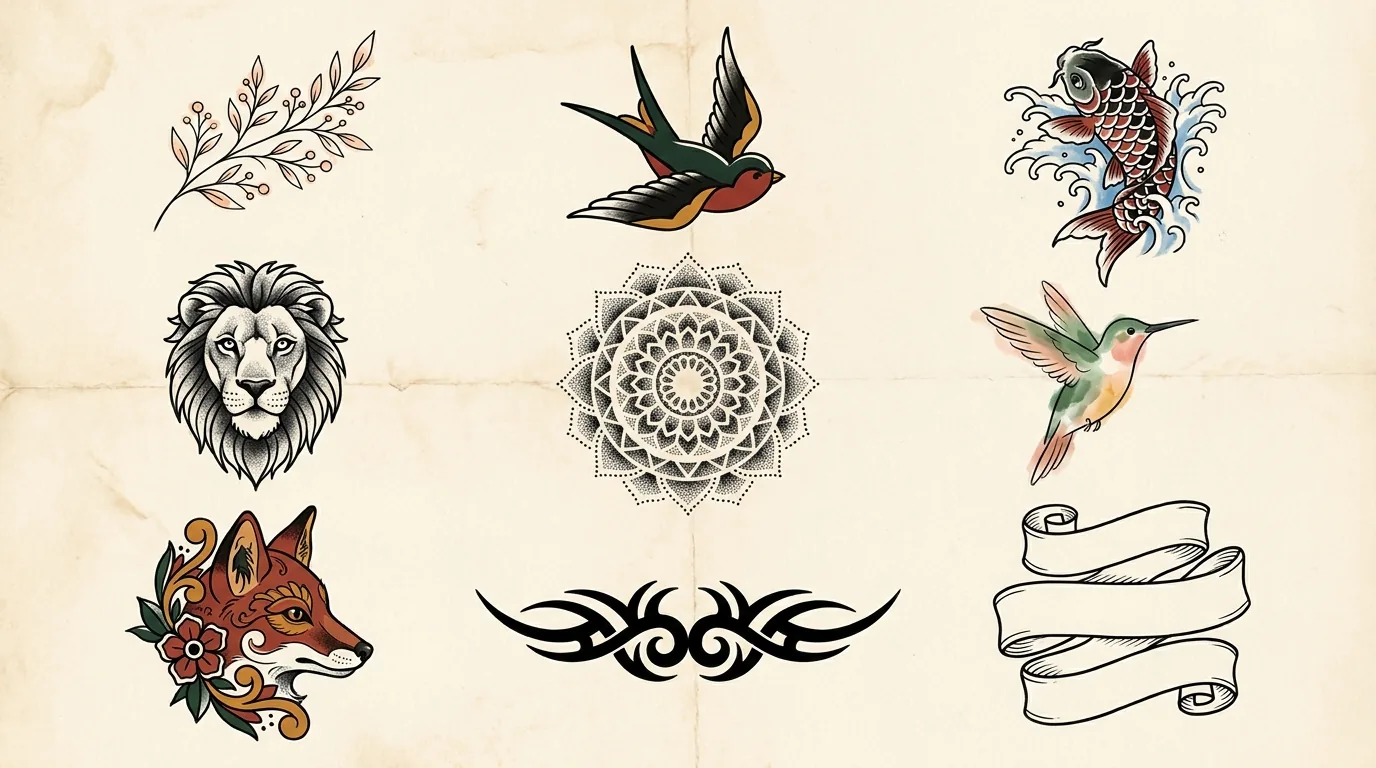
Tattoo styles overlap, and many artists mix them. Still, most artists are known for a few, and styles give you a shared language for the consultation. If you can say “black and grey realism” or “neo-traditional with a bit of color,” the artist knows where to start.
Each style below links to the shops on this site whose customer reviews or own website show that style. Counts are shops, not artists, and shops do more than their reviews mention, so always look at the artist’s own portfolio too.
Fine line
Thin, delicate lines made with very small needle groupings, often with little or no heavy shading. Fine line suits small, detailed pieces: botanical drawings, small symbols, script and minimal designs. It looks soft and precise.
In a portfolio: Look hard at healed photos. Thin lines can soften and spread a little as they age, so ask how the artist sizes designs to keep detail readable, and check that their lines stay steady and unbroken.
Traditional
Also called American traditional or old school. Bold black outlines, a limited palette led by red, green, yellow and black, solid fills and simple shading. Classic subjects include roses, swallows, daggers, eagles, panthers, ships, hearts and banners, much of it from old flash sheets.
In a portfolio: Look for clean, confident outlines and solid, even color with no patchy spots. Traditional is known for holding up well over the years because of its bold lines and solid color.
Realism
Tattoos meant to look like a photograph or a realistic painting: animals, nature, objects and scenes, in color or black and grey. Realism depends on smooth shading, careful contrast and fine detail rather than outlines.
In a portfolio: Check contrast and smoothness in healed work, not just fresh photos. Realism usually needs room, so expect an artist to suggest a larger size to keep the detail.
Black and grey
Tattoos done in black ink only, diluted to a range of greys for soft shading. It covers everything from realism and portraits to religious pieces and script, and is strongly associated with Chicano tattooing on the West Coast.
In a portfolio: Look for smooth gradients from dark to light with no blotchy patches, and enough contrast that the design still reads from a few feet away.
Japanese
Also called irezumi. Large, flowing compositions designed to fit the body, with backgrounds like wind bars, waves and clouds. Common subjects include koi, dragons, tigers, snakes, peonies, cherry blossoms and hannya masks. Pieces are often sleeves or back pieces done over many sessions.
In a portfolio: Look for artists who plan the whole piece around the body, not just a single image. Ask about the meaning of traditional elements and how they fit together.
Neo-traditional
Built on traditional tattooing, with bold outlines and solid color, but with more varied line weights, a wider palette, more depth and more ornamental detail. Animals, portraits of women, flowers and decorative frames are common.
In a portfolio: Look for bold lines that still read clearly, smooth color blends, and a balanced design that holds together from a distance.
Blackwork
Tattoos made with solid, saturated black ink: bold illustrative pieces, patterns, ornamental work and large areas of solid black. Blackwork often uses the contrast between black and bare skin as part of the design.
In a portfolio: Solid black should look evenly packed in healed photos, with crisp edges between black and open skin.
Color
Any style that relies on colored ink, from bright traditional to soft realism. Color can make a design pop, and many artists build their whole style around it.
In a portfolio: Look at healed color, especially lighter shades, which tend to fade sooner. Sunscreen on healed color matters, so plan for it. If you have had reactions to skin products before, mention it at your consultation.
Portraits
A realistic likeness of a person or a pet, in color or black and grey. Portraits are among the most demanding tattoos because small errors in a face are easy to notice.
In a portfolio: Look for several healed portraits in the artist’s work, not just one. Bring the clearest, sharpest reference photo you have; the tattoo can only be as detailed as the photo. Very small portraits lose detail, so expect a size suggestion.
Lettering & script
Words, names, dates and quotes, in anything from flowing script to blackletter (the style of this site’s headings) to clean print. Many lettering artists draw letters by hand rather than using a font.
In a portfolio: Check spacing between letters, even line weight and how readable it is. Spell-check everything before booking and again on the stencil. Tiny text can blur over time, so size up if it needs to stay legible.
Geometric & dotwork
Designs built from lines, shapes and patterns, such as mandalas and sacred geometry, often shaded with dots instead of solid shading (dotwork, sometimes called stippling).
In a portfolio: Precision is everything: straight lines, even spacing and symmetry that still looks right once it wraps around a curved arm or leg. Check healed dotwork to see how the dots settled.
Watercolor
Soft washes and splashes of color that imitate watercolor painting, often with loose edges and few or no outlines. It can look light and painterly.
In a portfolio: Healed photos are essential. Without strong outlines, soft color can spread and fade, so many artists add some black linework or structure. Ask how the artist handles that.
Anime
Characters and scenes inspired by Japanese animation and manga, usually with clean outlines, bright color and expressive faces. Some artists specialize in it.
In a portfolio: Look for clean, consistent linework and accurate character proportions. Bring good reference images of the character and pose you want.
Polynesian & tribal
Polynesian tattooing comes from the cultures of the Pacific Islands, including Samoan, Maori, Hawaiian, Tahitian and Marquesan traditions, with bold black patterns whose elements can carry meaning about family, place and identity. The word tattoo itself comes from the Polynesian word tatau. "Tribal" is also used for bold black curving designs popular in the 1990s.
In a portfolio: For Polynesian work, look for an artist who knows the tradition and can explain the meaning of each element. Treat it with respect; some designs have cultural significance.
How to pick a style
- Start with what you love looking at. Save tattoos you like for a few weeks. Patterns appear quickly: bold or delicate, color or black and grey, realistic or illustrative.
- Think about size and placement. Detailed styles like realism and portraits need room. Fine line and small lettering suit small spaces but need careful sizing.
- Think about aging. Bold lines and solid black hold up best. Soft color and very fine detail change more over the years.
- Covering an old tattoo? Darker, busier styles hide more. See cover-up tattoos, explained.
Then find an artist who does that style well. Our guide on how to choose a tattoo artist covers portfolios and healed photos, and the tattoo styles pages list shops by style and state.
Common questions
- What tattoo style lasts the longest?
- Bold styles with strong black outlines and solid fill, such as traditional, tend to hold up best over the years. Very fine lines, tiny detail and soft color without outlines usually change more as they age. Placement, sun exposure and aftercare matter too.
- What is the difference between traditional and neo-traditional?
- Both use bold outlines and solid color. Neo-traditional adds varied line weights, a wider palette, more depth and more ornamental detail, while traditional keeps a limited palette and simpler shading.